
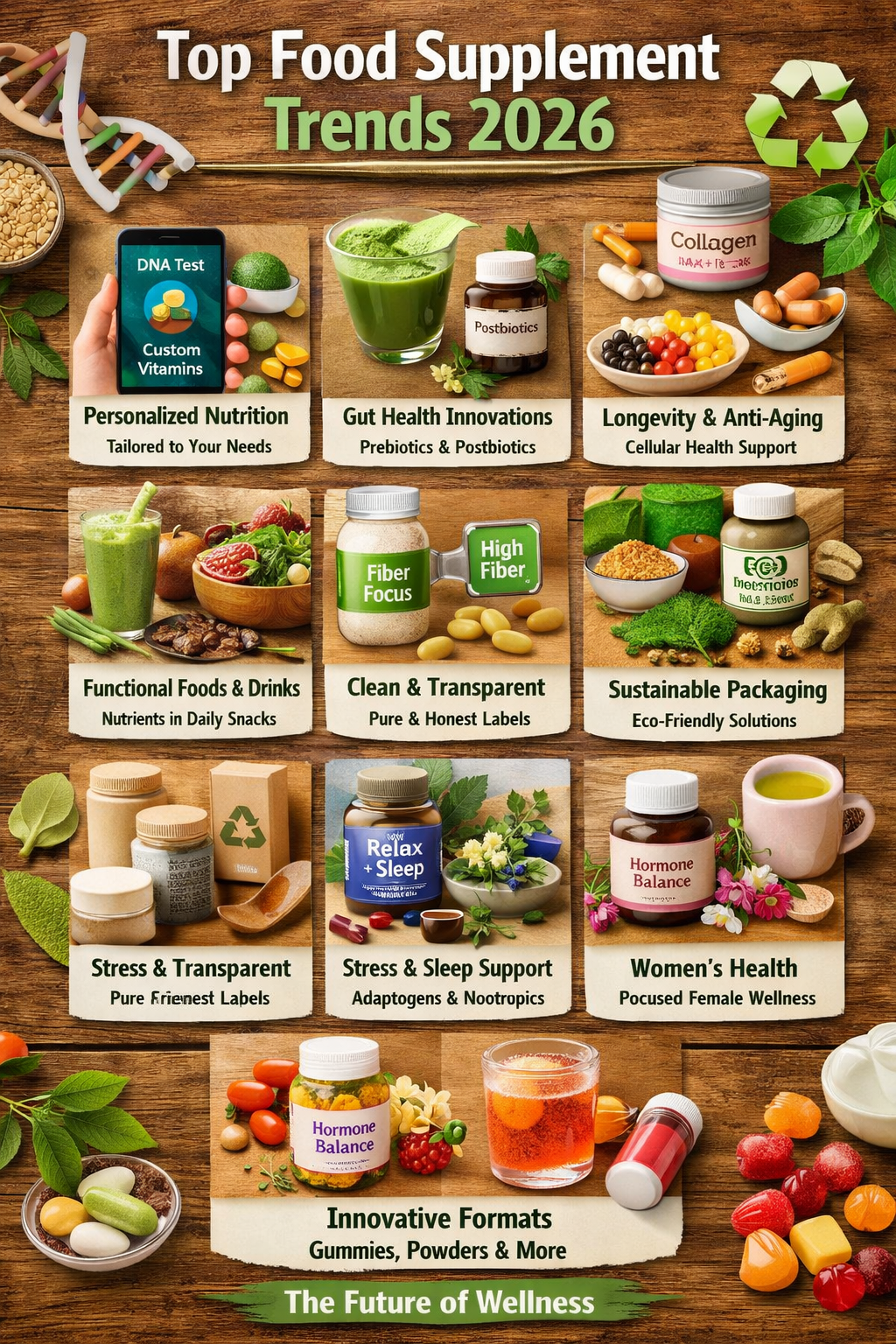
The food supplement market continues to evolve rapidly as consumers redefine what wellness means and how they want to achieve it. In 2026, we’re seeing major shifts across categories — from what people take to why and how they take it. Understanding these trends helps brands innovate and consumers make smarter health choices.
1. Personalization Is No Longer Optional
One of the biggest overarching trends is the move toward personalized nutrition. Consumers want supplements tailored to their age, lifestyle, genetics, and health goals — not one-size-fits-all formulas. DNA tests, biomarker tracking, and AI-driven recommendations are making it possible for brands to offer highly individualized supplement stacks designed for better outcomes.
2. Gut Health Goes Beyond Probiotics
Gut health remains a dominant theme, but the conversation is evolving:
- Postbiotics (non-living microbial byproducts) are emerging because they offer stability and functional benefits without common probiotic formulation limits.
- Prebiotics and synbiotics continue to be popular as awareness grows around the microbiome’s role in immunity, mood, and overall health.
This trend reflects a more holistic view of digestive health — from microbes themselves to their metabolites and how they shape wellness.
3. Longevity & Aging Gracefully
2026 sees a strong focus on healthspan — living not just longer, but healthier. Consumers are investing in supplements that support cellular function, inflammation control, muscle health, and cognitive resilience. Ingredients like collagen, hyaluronic acid, antioxidants, and NAD+ precursors are increasingly featured for their roles in aging support and youthful vitality.
4. Functional Ingredients Move Into Everyday Life
Supplements are blending with food and drink in ways that blur traditional product boundaries:
- More functional foods and fortified beverages are being launched with targeted benefits, extending supplements into daily consumption habits.
- Ingredients like fiber, creatine, and nootropics are showing up in formats beyond pills — such as gummies, drink mixes, and snack bars.
This shift reflects consumer demand for convenience, pleasure, and wellness in a single experience.
5. Fiber Is the New Frontier
While protein dominated the past decade, fiber is emerging as the next big nutrient trend. Fiber aids satiety, supports gut health, and complements appetite-regulating pathways — especially in light of trends toward weight management and metabolic wellness.
Brands are responding with fiber-forward products and fortified supplements that help fill gaps in typical Western diets.
6. Clean Label, Transparency & Trust
Consumers increasingly expect clean-label supplements that avoid unnecessary additives, artificial colors, and obscure ingredients. Transparency about sourcing, clinical backing, and manufacturing standards is central to winning trust — especially in a crowded market. Third-party certifications (e.g., organic, vegan, GMP) are becoming table stakes.
7. Sustainability and Ethical Packaging
Eco-conscious buyers are pushing brands toward sustainable packaging and ethical ingredient sourcing. Recyclable, biodegradable, minimalist packaging and transparent supply chains are not niche preferences — they’re mainstream expectations.
8. Functional Support for Modern Lifestyles
Consumers want help managing stress, sleep, mood, and energy — not just basic nutrition. Supplements targeting stress resilience, focus enhancement, sleep quality, and mood balance are gaining traction, combining adaptogens, nootropics, and calming botanicals into everyday formulas.
9. Women’s Health Continues to Lead Innovation
Women’s health remains a hotspot for innovation — from hormone balance and PMS support to bone and metabolic health. Brands that genuinely address female-focused needs (with science-backed formulas rather than generic multivitamins) are expanding rapidly.
10. Delivery Formats Are Expanding
“Pill fatigue” has accelerated demand for alternative formats. Gummies, effervescent tablets, drink mixes, and ready-to-drink supplements are not just fun — they improve adherence and appeal to a broader audience. Personalization platforms now often ask about format preference as part of building custom regimens.
Conclusion: A Wellness Ecosystem, Not a Category
In 2026, food supplements are no longer isolated products — they’re part of a holistic health ecosystem that intersects with food, lifestyle, tech, and personal identity. Successful brands will be those that prioritize transparency, personalization, nutrient density, and genuine health value above hype.
Whether you’re a consumer or a creator in the space, understanding these trends will help you navigate — and influence — the future of wellness.